STP: Segmentation, Targeting, Positioning
Decide who you are for, who you are not for, and the one reason they should pick you.
On this page
The gist
- →Sequence: segment the market on what drives buying, pick 1-2 segments where attractiveness meets your right to win, then position against a named alternative.
- →Segment on needs and behaviour, not just age or income — then kill segments that fail Kotler's tests: measurable, substantial, accessible, differentiable, actionable.
- →Targeting is subtraction: rupee-size each segment (buyers x frequency x price), commit to a beachhead, and say which segments you are walking away from.
- →Positioning = frame of reference + points of parity + one point of difference + proof; compress into Moore's one-liner and cascade it into the 4Ps and metrics.
The framework at a glance
When to use it
Reach for STP whenever the real question in the case is who do we sell to and why would they buy from us rather than the incumbent. Classic triggers: a new product or brand launch, entry into a new geography or category, a stale brand that needs repositioning, a client whose marketing spend is spread thin with poor conversion, a premium player deciding whether to fight down-market or a mass player deciding whether to go premium, and any case where the interviewer says our product is technically better but nobody is buying. STP is also frequently a sub-branch inside a bigger case rather than the whole answer: inside a market entry case it sits under the customer branch; inside a pricing case it tells you whose willingness to pay you are actually pricing against; inside a revenue-decline case it exposes that the brand has lost its core segment to a sharper competitor; inside a go-to-market case it defines the beachhead you launch into first. Do not use it when the problem is purely internal cost, operations or organisation design, and do not let it substitute for sizing the market or building the P&L.
What it is
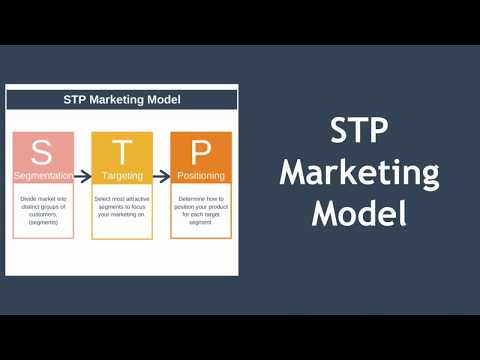
STP stands for Segmentation, Targeting and Positioning. It is the standard way marketers and strategy consultants answer three questions in sequence: what different kinds of buyers exist in this market, which of them are we going to serve, and what should we stand for in their heads so they choose us over the alternative. The sequence was popularised by Philip Kotler in Marketing Management from the late 1960s onward, and it is now the spine of almost every marketing syllabus and every go-to-market plan. The logic is simple: no company can be the best choice for everybody, so the only way to win is to be an obviously better choice for somebody specific.
Keep reading ↓Show less ↑
Segmentation is the analytical step. You break a market into groups whose members behave alike and who differ meaningfully from the other groups. You can split on demographics (age, income, life stage), geography (metro versus tier 2, North versus South), psychographics (values, attitudes, lifestyle) or behaviour (usage occasion, frequency, benefit sought, price sensitivity, loyalty). The best segmentations are needs-based or behaviour-based rather than purely demographic, because a 28-year-old software engineer in Bengaluru and a 28-year-old shopkeeper in Kanpur share demographics and almost nothing else. Kotler's test for whether a segmentation is any good is that segments must be measurable, substantial, accessible, differentiable and actionable. If you cannot size a segment, reach it through a channel, or design a distinct offer for it, it is a description, not a segment.
Targeting is the choice step. You evaluate each segment on two axes: how attractive it is (size, growth, profitability or lifetime value, competitive intensity, ease of access) and how well you can win it (product fit, brand permission, channel access, cost to serve, capabilities). You then pick a coverage strategy: undifferentiated (one offer for the whole market, rare today), differentiated (tailored offers for several segments), concentrated or niche (all your resources on one segment), or micro-marketing and personalisation. Positioning is the design and communication step. You define the frame of reference (the category the customer mentally files you under), your points of parity (the table stakes you must match), your point of difference (the one thing you are better at that the customer actually cares about) and your reasons to believe (proof you can deliver it). A perceptual map, plotting competitors on the two attributes customers really decide on, is the fastest way to find empty, defensible space. The output is a positioning statement, most often in Geoffrey Moore's template from Crossing the Chasm: for [target customer] who [need], [brand] is a [category] that [key benefit]; unlike [main alternative], we [primary differentiator]. That one sentence then drives price, product, channel and message, which is where STP hands off to the 4Ps.
How to apply it, step by step
- 1
Define the market you are segmenting
Before you split anything, say out loud what pool you are splitting. Is it all Indian tea drinkers, or urban packaged-beverage buyers, or people looking for an energy boost between 3 and 5 pm? The frame you choose determines who your competitors are and what price looks expensive. State it in one sentence and confirm it with the interviewer, because a wrong frame makes everything downstream wrong.
- 2
Choose segmentation bases that actually change buying behaviour
List the candidate bases out loud (demographic, geographic, psychographic, behavioural, needs or job-to-be-done, and in B2B firmographics such as industry, company size and buying process), then pick the two that best explain why one buyer chooses differently from another. Combine them into a simple grid. Two well-chosen dimensions producing four to six segments beat a fifteen-cluster analysis nobody can act on.
- 3
Stress-test each segment against the five criteria
Apply Kotler's filter: measurable (can you size it), substantial (is it big or profitable enough to bother), accessible (can you reach it through media, distribution and sales), differentiable (does it respond differently from the neighbouring segment), actionable (can you build a distinct offer with the resources you have). Kill or merge any segment failing two or more. This is what separates a real segmentation from a slide of personas.
- 4
Size and value each surviving segment
Put numbers on the board: number of buyers times purchase frequency times average price gives an annual revenue pool; apply gross margin and cost to serve to get a profit pool. Add growth rate and rough customer lifetime value where you can. Interviewers reward candidates who convert qualitative segments into a rupee ranking, because that is what turns a marketing exercise into a resource-allocation decision.
- 5
Score attractiveness against right to win, then choose targets
Draw a 2x2 or a scored matrix. Attractiveness axis: size, growth, profitability, competitive intensity, ease of access. Right-to-win axis: product fit, brand permission, channel reach, cost position, capabilities, partnerships. Target the top-right cells, explicitly de-prioritise the rest, and say why you are walking away from them. Naming the segments you will not serve is the most credible thing you can do here.
- 6
Pick a coverage strategy and a beachhead
Choose between undifferentiated, differentiated, concentrated and micro-targeted coverage, and justify it with the client's budget and capability rather than with theory. For a new entrant or a challenger, almost always concentrate on one beachhead segment you can dominate, then sequence adjacent segments into phase two and three. Spreading a limited launch budget across four segments usually means being invisible in all four.
- 7
Build the positioning: frame, parity, difference, proof
For each target segment define the frame of reference (the category the customer compares you within), the points of parity you must match so you are not disqualified, the point of difference the customer genuinely values and rivals cannot easily copy, and the reasons to believe (ingredient, technology, certification, service guarantee, price architecture, founder story). Plot a perceptual map on the two attributes customers decide on and look for empty space that has real demand behind it.
- 8
Write the statement and cascade it into the mix and metrics
Compress everything into Moore's one-sentence template: for [target] who [need], [brand] is a [category] that [key benefit]; unlike [alternative], we [differentiator]. Then push it through the 4Ps so it becomes real: price point and pack size, product features and variants, channels where that segment actually shops, and message and creative. Finally name the metrics that prove it landed: awareness and consideration inside the target segment, trial and repeat rate, share of segment, and price premium versus the alternative.
Worked example
A 8,000 crore rupee Indian FMCG company with strong dairy and biscuit brands wants to launch a ready-to-drink protein beverage. The CEO's target is 300 crore rupees of revenue in year one. The team's instinct is to sell it to everyone as a healthy drink for the whole family. You are asked which consumers to build the launch around and what the brand should stand for.
Frame the market
The market is packaged nutrition beverages consumed by urban Indians, not all beverages. That frame makes the competitive set whey protein powders, malted drinks of the Horlicks and Bournvita type, flavoured milk and lassi, and to a degree protein bars, rather than colas and juices. This matters because it decides whether the benchmark price per serving is 20 rupees or 120 rupees.
Segment on need plus behaviour, not just age
Two bases explain behaviour best here: primary need (build muscle, replace a meal, general wellness, manage a health condition, feed the child) and purchase behaviour (who pays, where they shop, how often). That yields five segments: gym-going fitness users aged 22 to 35 in metros; time-poor office commuters wanting a breakfast replacement; mothers buying nutrition for children aged 5 to 14; health-managing adults over 45 watching sugar; and hostel and PG students. A purely demographic cut such as urban 18 to 45 would have merged the first four into one meaningless block.
Apply the five criteria
Students fail substantiality at a 99 rupee price point, since the segment cannot sustain the frequency needed. Health-managing over-45s fail differentiability for this product, because they respond to a sugar-free malted drink from a trusted brand rather than a protein shake. Mothers buying for children are large and measurable but the segment is locked up by incumbents with decades of brand equity, so the company has weak right to win in year one. Fitness users and office commuters survive all five criteria.
Size the survivors
Illustrative sizing for fitness users: roughly 25 million fitness-active Indians, of whom about 20 percent live in the top 8 cities with reliable modern trade and quick commerce, gives about 5 million reachable buyers. Assume 6 percent become regular buyers in year one, that is 300,000 people. At 2 bottles a week, roughly 100 bottles a year, at 99 rupees each, that is 9,900 rupees per buyer per year and about 297 crore rupees of revenue, essentially the CEO's 300 crore target. The office-commuter segment is larger in headcount but converts at a lower price and lower frequency, so it yields less year-one revenue per rupee of marketing spend.
Target and sequence
Concentrate the launch on gym-going fitness users as the beachhead. They are highly attractive because they already spend 2,000 to 4,000 rupees a month on supplements, the segment is growing, and it is reachable through gyms, quick commerce and fitness creators. The company has a real right to win because its cold chain and dairy sourcing let it deliver a chilled ready-to-drink product powder brands cannot match. Office commuters become the phase-two expansion in year two with a lower-protein, lower-price pack. Say no to the kids segment in year one, explicitly.
Position against the real alternative
Frame of reference: protein nutrition, not flavoured milk. Points of parity: taste, digestibility, and a price within striking distance of a home-made shake. Point of difference: 25 g of real whey protein with no mixing, no clumps and no added sugar, available chilled where and when you train. Reasons to believe: whey from the company's own dairy supply chain, lab-tested protein content printed on pack, lactose-light formulation, and cold-chain distribution to gym counters and 10-minute delivery apps. On a perceptual map of convenience against protein credibility, powders sit high-credibility and low-convenience, flavoured milk sits high-convenience and low-credibility, and the top-right corner is empty.
Write the statement and cascade it
For gym-going urban Indians aged 22 to 35 who want serious protein without carrying a shaker, the brand is a chilled ready-to-drink protein shake that delivers 25 g of tested whey protein in one 200 ml bottle for 99 rupees. Unlike imported whey powders it needs no mixing and no trust in an unverified import; unlike flavoured milk it has no added sugar. Cascade: price 99 rupees single and 449 for a five-pack; product in 200 ml PET with only two flavours at launch; place in gym chains, premium modern trade and quick commerce across 8 cities; promotion through fitness creators and trainer-led sampling. Track trial rate, 4-week repeat rate and share of protein occasions inside the segment.
Takeaway: The 300 crore target is reachable from one segment of 300,000 committed buyers and unreachable by being vaguely healthy for everyone. Segmenting on need rather than age revealed which groups the company could actually win, and positioning against the correct alternative, whey powder rather than flavoured milk, is what justifies the 99 rupee price.
More worked examples
Worked example: how Tesla used STP to enter the car market from the top+
It is 2006. Tesla is a startup with no factory, no dealer network and no brand, and lithium-ion battery packs cost roughly ten times what they cost today. Every other electric car on the road is being sold as a sacrifice: slower, uglier and smaller in exchange for lower emissions. Tesla has to decide which car buyers to build its first product for, and what an electric car should stand for in their heads. The answer it chose, published openly as the 2006 secret master plan, is one of the cleanest concentrated-beachhead STP decisions in business history.
Roadster price (approx)
~$109,000
Roadster units sold, 2008-12 (approx)
~2,450
Battery cost then vs later (illustrative)
~$1,000/kWh to ~$150/kWh
Model S launch price band (approx)
~$70k-100k
Model 3 announced base price
$35,000
Frame the market being segmented
The instinctive frame is the electric vehicle market, and it is the wrong one. Under that frame Tesla's competitors are the Toyota Prius and the Nissan Leaf, the reference price is roughly $25,000 to $35,000, and a $109,000 car is absurd. Tesla framed the market instead as high-performance luxury cars, which puts the competitive set at the Porsche 911, BMW M-series and Mercedes AMG. In that frame a six-figure price is normal, a 0-60 mph time is the currency of the category, and the electric drivetrain becomes a performance advantage rather than an environmental compromise. The frame decision does more work here than any other single choice in the case.
Pick segmentation bases that change buying behaviour
Two bases explain car buying better than demographics: the primary benefit sought, and price tolerance driven by whether this is a household's only car. Cross them and you get roughly five segments. Eco-frugal commuters who buy a Prius to cut fuel bills and feel responsible, at $25k-35k. Mainstream family sedan buyers who want reliability and resale value, the Camry and Accord buyer at around $30k. Affluent technology early adopters, largely in Silicon Valley, buying a third car as a statement and a gadget, comfortable above $80k. Performance enthusiasts who buy on 0-60 times, track capability and brand heritage. And fleet and commercial buyers who buy on total cost per mile. Note that a demographic cut such as men aged 35-55 would have collapsed segments two, three and four into one useless block, even though they buy for completely opposite reasons.
Run the five criteria and let cost structure kill segments
Eco-frugal commuters are large and measurable but fail actionability given Tesla's resources in 2006. At roughly $1,000 per kWh, the Roadster's 53 kWh pack alone represented something on the order of $50,000 of cost, so a $30,000 electric commuter car was not a marketing choice, it was arithmetic that did not close. Mainstream family buyers fail right-to-win on every dimension: no plant capable of volume, no dealer network, no service footprint, no brand permission. Fleet buyers fail on accessibility because they buy on proven cost per mile over years and a startup has no data. Affluent early adopters pass all five: measurable (a few thousand people who had put down deposits on things like this before), accessible without any dealer network via word of mouth and a handful of direct showrooms, differentiable because they respond to acceleration and software rather than to fuel savings, and actionable because a few thousand hand-built units on a Lotus Elise-derived chassis was within reach.
Target one beachhead and sequence the rest explicitly
Tesla concentrated everything on the affluent early adopter and stated the sequence in public: build a low-volume expensive car, use that money to build a mid-volume, less expensive car, then use that money to build a high-volume affordable car. The Roadster sold on the order of 2,450 units at roughly $109,000, which is a rounding error of revenue in the auto industry but is enough to prove the drivetrain, build a brand and attract capital. Model S then took the mid rung at roughly $70,000 to $100,000, and Model 3 was announced at a $35,000 base. Crucially, each rung is a different segment, not just a cheaper car, and the segment order is dictated by the battery cost curve moving from roughly $1,000 per kWh toward roughly $150 per kWh. That is what a defensible targeting sequence looks like: the trigger for moving to the next segment is an external cost variable, not optimism.
Position against the right alternative
The frame of reference is a fast luxury car, not a green car. Points of parity are the things that would otherwise disqualify Tesla in that category: interior quality, safety credentials, and above all range, which is why the Supercharger network and a real-world highway range in the 200-plus mile band mattered more than any advertisement. The point of difference is that electric makes the car better rather than more virtuous: instant torque with no gearbox lag, a silent cabin, a car that improves after purchase via over-the-air software updates, and no fuel stops for daily driving. Reasons to believe were deliberately third-party and verifiable rather than self-declared, including a sub-four-second 0-60 time, Motor Trend Car of the Year for Model S in 2013, and top-tier crash test results. On a perceptual map of environmental credentials against desirability, the Prius and Leaf sit high-green and low-desire, the BMW M5 sits high-desire and zero-green, and the entire top-right quadrant was empty.
Cascade into the mix and the metrics
The positioning forced the rest of the model. Place: company-owned showrooms in high-end malls and direct online ordering, because a franchised dealer earning most of its profit on servicing internal combustion engines has no incentive to sell a car with far fewer serviceable parts. Price: fixed and published, no haggling, which suits a segment that researches online and despises the dealership ritual. Product: two flavours of the same message, a performance variant to hold the point of difference and a long-range variant to hold the point of parity. Promotion: almost no paid advertising for years, because the target segment is reached through press, founder narrative and owner evangelism. The metrics that mattered were segment-level, not market-level: reservation deposits, waiting-list length, order backlog and average selling price, and only later market share, which would have looked hopeless for years if used as the launch scorecard.
Takeaway: Choosing the frame of reference was the strategic act. By segmenting on benefit sought and price tolerance rather than on who cares about the environment, Tesla found a small segment it could actually win, and by positioning against a Porsche instead of a Prius it earned the price premium needed to fund the descent to the mass market. The lesson for a case: when a client has a superior product but no cost position, the answer is almost never to launch broad and cheap. It is to find the segment where the cost disadvantage does not disqualify you, win it outright, and pre-commit to the sequence and the trigger that takes you down-market.
Worked example: Indian HR-tech SaaS choosing a beachhead (case-interview style)+
Your client is a Bengaluru-based payroll and HR software company at roughly Rs 60 crore of ARR, growing 25 percent a year but with sales efficiency getting worse each quarter. Their pitch is a complete HR suite for Indian businesses of every size, they have 40 people in sales and about 60 in engineering, and win rates are falling in every deal type. The board has funded a plan to reach Rs 100 crore of ARR in three years and wants to know which customers to build the company around. Sales says go up-market to enterprises, marketing says the volume is in small businesses. You are asked to settle it.
Indian companies with 200-1,000 employees (approx)
~40,000
Share with large blue-collar or contract workforce (est.)
~40%, ~16,000 firms
Pricing, per employee per month
Rs 80 PEPM
ARR per account, 450 employees (approx)
~Rs 4.3 lakh
5% penetration of target segment
~800 accounts, ~Rs 35 crore ARR
Frame the market before segmenting it
Say the frame out loud and confirm it. This is not the Indian HR tech market, which sweeps in recruitment, learning and engagement tools that the client does not sell. The frame is Indian employers who pay to run payroll and statutory compliance, which means PF, ESI, professional tax, TDS and labour registers. That frame sets the real competitive set: Excel plus a local chartered accountant at the bottom, outsourced payroll bureaus in the middle, horizontal SaaS such as Zoho Payroll, greytHR and Keka in the mainstream, and SAP SuccessFactors or Darwinbox at the top. It also sets the reference price, because a client currently paying a CA Rs 15,000 a month to run payroll for 300 people has an anchor of about Rs 50 per employee per month.
Segment on firmographics that predict behaviour, not just size
Employee count is the obvious base, but on its own it is lazy. The second base that actually changes buying behaviour in India is workforce composition, because a 400-person IT services firm with salaried white-collar staff in one state and a 400-person auto components plant with contract labour across three states have almost nothing in common as buyers. Cross the two and you get six cells worth discussing: micro firms under 25 employees, SMB 25-200, mid-market 200-1,000 and enterprise 1,000-plus, each split into white-collar salaried and blue-collar or contract-heavy. Buying process differs too: in the SMB white-collar cell the founder or a single HR manager decides in two weeks, in mid-market manufacturing the plant HR head recommends but the CFO and often the group compliance head sign, and in enterprise there is a formal RFP, a security review and a nine to twelve month cycle.
Apply the five criteria and kill segments honestly
Micro firms under 25 employees are enormous in count and fail substantiality: at roughly Rs 15,000 to 20,000 of annual contract value, no field or inside-sales motion pays back, and most of them are structurally happy with their CA. They can only be served self-serve, which the client is not built for, so decline them. Enterprises above 1,000 fail right-to-win: they demand SOC 2, single sign-on, SAP and Workday integrations and multi-year security reviews, and the incumbents already own the logos; a 60-person engineering team burning a year on one such deal is how the client's sales efficiency got worse in the first place. Mid-market white-collar firms pass most tests but fail differentiability, because in that cell the client's product is functionally indistinguishable from three well-funded rivals, which is precisely why win rates are falling. Mid-market blue-collar and contract-heavy firms pass all five: measurable through MCA and factory registration data, substantial at four to five lakh of ARR each, accessible through compliance consultants and industry bodies, sharply differentiable because their pain is state-wise minimum wage revisions, contractor compliance and shift and overtime calculation, and actionable because the client already has half the required modules.
Size the survivors in rupees before choosing
Take roughly 40,000 Indian companies in the 200-1,000 employee band as an illustrative base, of which perhaps 40 percent, so about 16,000, run large blue-collar or contract workforces in manufacturing, logistics, retail chains and facility services. Price at Rs 80 per employee per month, above the Rs 50 CA anchor because the compliance risk being removed is worth more than the clerical work. An average account of 450 employees gives Rs 36,000 a month, about Rs 4.3 lakh of ARR. Winning 5 percent of the segment over three years is roughly 800 accounts and about Rs 35 crore of new ARR, which on top of the retained base clears the Rs 100 crore target. Contrast the SMB white-collar alternative: a far bigger pool, perhaps three lakh firms, but at roughly Rs 60,000 ARR you would need 3,000 wins for Rs 18 crore, with double the churn and several times the support load per rupee. Same effort, half the revenue, worse retention.
Score attractiveness against right to win and commit
Put the two axes on the board. On attractiveness, mid-market blue-collar scores well on ARPU and switching cost, moderately on growth and access, and best of all on competitive intensity, because the well-funded horizontal players are optimised for white-collar salaried payroll and treat contract labour as an edge case. On right to win, the client has a real advantage: it already maintains state-wise wage notification data and audit-ready register formats, which is a boring, unglamorous asset that takes a competitor eighteen months of grinding to replicate. The recommendation is a concentrated beachhead, not a differentiated multi-segment play, because 40 sellers cannot credibly run three buying processes at once. Say the subtraction out loud: no micro segment, no enterprise RFPs for two years, and mid-market white-collar accounts are accepted only inbound and never chased.
Build the positioning and cascade it
Frame of reference: the payroll and labour-compliance system for multi-state blue-collar workforces, deliberately not an HR suite. Points of parity you must match or be disqualified: accurate payroll runs, PF and ESI filings, a worker-facing mobile app in regional languages, and Tally and ERP export. Point of difference: contract labour and multi-state minimum wage handled natively, with wage notifications applied automatically and shift, overtime and attendance-linked pay computed without manual intervention. Reasons to believe: state wage revisions loaded within seven days of gazette notification, audit-ready statutory registers and muster rolls generated on demand, a contractual penalty indemnity up to a capped amount, and three named reference customers in the same sector and the same states as the prospect. The statement: for plant and operations HR heads in Indian companies running 200 to 1,000 blue-collar and contract workers across multiple states, we are the payroll and compliance system that makes every wage calculation and every statutory register audit-ready by default; unlike horizontal HR suites built for salaried office staff, we treat contractors and state wage law as the core of the product, not a plugin. Cascade it: Rs 80 PEPM with a lower tier for contractor headcount, go-to-market through compliance consultants, labour-law firms and plant-HR forums rather than performance marketing, and a roadmap that ships biometric and shift integrations before any recruitment module. Metrics: win rate inside the defined ICP rather than overall, sales cycle length, net revenue retention, and percentage of payroll runs completed without a manual correction.
Takeaway: The debate between up-market and down-market was the wrong axis. Adding workforce composition as a second segmentation base revealed a 16,000-company segment that no incumbent is designed to serve, and rupee-sizing it showed that 800 well-chosen accounts beat 3,000 cheap ones. The decision is a concentrated beachhead in mid-market blue-collar employers, with micro and enterprise explicitly declined, and a positioning that names the alternative it is better than rather than claiming to be a complete suite for everyone.
Common pitfalls
- •Segmenting on the data you happen to have instead of on what drives purchase. Splitting a market into 18 to 25, 26 to 35 and 36 to 45 is not a segmentation if all three buy for the same reason and respond to the same offer. Ask what would make these groups behave differently before you draw the line.
- •Producing segments you cannot reach or act on. A segment defined as consumers who value authenticity may be real in a survey and useless in practice, because no media plan, distributor or sales team can target it. Run the accessibility and actionability test on every segment before you present it.
- •Refusing to leave anyone out. If your answer to who is the target is urban India aged 18 to 45, you have not targeted. Targeting is a subtraction exercise, and naming the segments you deliberately walk away from is what makes the recommendation credible.
- •Positioning that describes the product instead of the choice. Saying we are a high-quality, innovative, customer-centric brand tells the customer nothing, because every competitor says it. Positioning only exists relative to a named alternative, so always state what you are better than and on what dimension.
- •Claiming a point of difference with no reason to believe and no defensibility. If the differentiator can be copied by a larger incumbent within a quarter, or if there is no proof the customer will accept, the positioning will not survive contact with the market.
- •Stopping at the positioning statement. STP that never becomes a price point, a pack size, a channel choice and a measurable metric is a slide, not a strategy. Always cascade into the 4Ps and name the numbers that will tell you whether it worked.
Interview tips
- •Announce your segmentation bases before you segment. Saying I can cut this market demographically, geographically, behaviourally or by need, and I think need and usage occasion matter most here because X, shows structure in ten seconds and is exactly what interviewers score.
- •Always put rupees on your segments. Buyers times frequency times price gives a revenue pool, and ranking segments by profit pool converts a marketing discussion into a resource-allocation recommendation. Even rough estimates beat adjectives like large and growing.
- •Use an explicit two-axis screen for targeting: segment attractiveness against our right to win. Say the axes out loud, place each segment, then commit to one or two. This is where most candidates hedge and lose points.
- •Close with a one-sentence positioning statement in Moore's format: for [target] who [need], [brand] is a [category] that [benefit]; unlike [alternative], we [differentiator]. It is memorable, it forces specificity, and it gives the interviewer something clean to write down.
- •Recognise when STP is a branch and not the tree. In market entry, go-to-market, pricing and new-product cases it usually sits under the customer branch of your structure. Flag it as such, do it well, then reconnect to the client's objective and economics.
- •Sanity-check your positioning against the incumbent's likely response. One line on what the market leader can do about this and why our position still holds shows commercial judgement rather than textbook recall.
Test yourself
Best video explainers
STP Marketing (Segmentation, Targeting, Positioning)
EPM
The cleanest short walkthrough of all three stages with a real-world example carried end to end; best first watch if you have never seen STP.

STP Marketing Explained (Segmentation, Targeting & Positioning Examples)
Brand Master Academy
Practitioner-level treatment with brand case studies; strongest on how a positioning is actually chosen and defended, not just defined.

Marketing: Segmentation - Targeting - Positioning
tutor2u
Exam-style clarity from a well-known business education channel; good for locking down the segmentation bases and targeting strategies you must be able to name.

Segmentation, Targeting, & Positioning or STP Framework by Phillip Kotler (Video Update 🎬)
Solve It Like A Marketer
Ties the framework back to Kotler's original formulation, which is the version most Indian MBA courses and interviewers assume you know.

Segmentation, Targeting and Positioning (STP) in Marketing - Super Heuristics
Darpan Saxena
Built for Indian MBA students and marketing placement prep: works through Indian brand examples and shows how STP is expected to be written up in a B-school marketing answer.
Go deeper
Segmenting-targeting-positioning
Wikipedia
Neutral overview of the full model, including the undifferentiated, differentiated and niche targeting approaches and the functional, symbolic and experiential types of positioning.
STP Framework (Segmentation, Targeting, Positioning)
Umbrex
Written for consultants: a step-by-step process plus an explicit segment-attractiveness versus ability-to-win prioritisation matrix, which is exactly how to run STP under case conditions.
Criteria for Effective Market Segmentation
Segmentation Study Guide
The best free explanation of the tests a segment must pass, covering homogeneity, heterogeneity, measurability, substantiality, accessibility, actionability and responsiveness with worked reasoning.
What is segmentation, targeting, positioning (STP)?
Adjust
Concise glossary entry that maps the classical framework onto modern digital execution, useful for seeing how STP shows up in acquisition and personalisation today.
Three Questions You Need to Ask About Your Brand
Harvard Business Review (Keller, Sternthal, Tybout)
The canonical source for the positioning half of STP: why frame of reference and points of parity matter as much as your point of difference, and how brands lose by obsessing over differentiation alone.
Now use it on a real case
Reading a framework isn't the same as applying it under pressure. Practise with an AI interviewer that pushes back.
Practise a case free